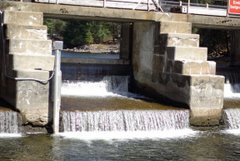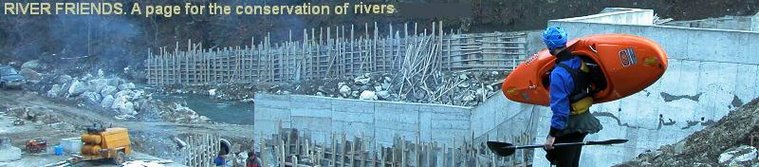

This summary come from Saskatoon where there are considering a whitewater Park by altering an existing weir on the Saskatchewan river
TO: Secretary, Planning and Operations Committee
FROM: General Manager, Community Services Department
DATE: October 22, 2007
SUBJECT: Whitewater Park Proposal Community Engagement Feedback
FILE NO: CK. 4129-1, LS. 5520-1
RECOMMENDATION: that the request for the Functional Design Study on the Whitewater Park Proposal be referred to the 2008 Capital Budget Committee.
BACKGROUND
During its March 12, 2007 meeting, City Council received a report from the General Manager, Community Services Department regarding a Whitewater Park recreational facility. Representatives from the Whitewater Park Committee advised City Council that their organization had done a significant amount of public consultation and requested that a stakeholder group be established to prepare a preliminary design for consideration during the 2008 Capital Budget. City Council resolved:
“1) that the Administration prepare a capital budget submission to proceed with the public consultation as described in this report to determine the level of interest for a whitewater recreation facility in Saskatoon and to identify issues and concerns from neighbours and other stakeholders related to the operation of such a facility at the proposed location (i.e. the weir);
2) that should the above capital budget project be approved by City Council, the information gathered from the above consultations and the technical expertise within our Corporate staff be used to develop a list of design and operational criteria for inclusion in the terms of reference for any preliminary or detailed design plans that may be approved by City Council in the future; and
3) that the Administration and Whitewater Park Committee work together in setting budget and timing of the preliminary design.”
During its July 16, 2007 meeting, City Council considered a report from the General Manager, Community Services Department outlining a Community Engagement Strategy for the proposed Whitewater Park at the weir. City Council approved that the Administration proceed with the Community Engagement Strategy outlined in the report to determine the level of interest for a whitewater recreation facility in Saskatoon and to identify issues and concerns from stakeholders.
The purpose of this report is to bring forward the results of the public consultation process, and to identify the components that would be included in terms of reference for a preliminary design study that would address the issues raised through the public consultation process.
REPORT
As was reported to City Council in July, the Whitewater Park Committee had already done a significant amount of public consultation on this project during late 2005 to May 2007. To supplement the community consultations conducted by the Whitewater Park Committee, the Administration implemented the Community Engagement Strategy approved by City Council.
Summary Feedback
During the community engagement process, your Administration received verbal comments and questions raised at the internal stakeholder meeting and at the special meeting for the neighbouring community associations. In addition to this, there were comment forms and emails submitted. In total there were approximately 375 comments, questions, and concerns received. There were a significant number of the comments collected from supporters of the Whitewater Park Committee, and the Committee took an active role in promoting the public engagement opportunities and encouraged their supporters to forward comments in support of the Whitewater Park.
The summary can be categorized as follows:
• 65 percent were Saskatoon residents and strongly in favour of the project,
• 15 percent were non-city residents in favour of the project. Comprised primarily of rowing and kayaking clubs and individuals from across Canada interested in having the facility available to use for training or recreational purposes.
• 15 percent were Saskatoon residents strongly opposed to the project; and
• 5 percent had mixed reviews. They were not absolutely opposed to the project but wanted to ensure a number of issues were addressed if the project was to proceed.
The following is a summary of the public input opportunities and a general summary of the feedback gathered:
1. Internal Stakeholder meeting – A meeting was held with staff from various Civic departments, who may be directly or indirectly affected by this project. Fifteen staff attended representing 12 Branches within the Corporation, and the discussion centred on general comments and requirements surrounding the design and development of the Whitewater Park.
2. Meeting with neighbouring Community Associations – This meeting was hosted on September 13, 2007, with 11 people were in attendance representing City Park, North Park, Richmond Heights, River Heights, and Caswell Hill. There was interest in the project as it would open the river for use and it would provide a good facility for the rowing and canoeing clubs. However, the concerns were as follows:
- noise;
- lack of parking and access to the facility;
- traffic to the area;
- changes to the promenade recently dedicated by Prince Charles; and
- safety of the weir.
There was general consensus that the water park should be developed at a different location along the river, such as the east side of the river adjacent to the University of Saskatchewan.
3. Open House Meetings and E-mails - There were two open house meetings hosted, one hosted on site at the weir on Saturday, September 22, 2007 (approximately 300 people attended) and one hosted at SIAST, Kelsey Campus on September 27, 2007 (approximately 125 people attended). The Whitewater Park Committee distributed notices of the open house meetings encouraging people to attend. Presentations on the Whitewater Park were made at both meetings by representatives of the Whitewater Park Committee. The following is a summary of the comments:
a) In support of Whitewater Park:
• Opportunity to get better use of the river.
• Tourism and economic benefits.
• Will make the weir safer and more environmentally friendly.
• Will increase the interest in the sport or kayaking and paddling.
• Provides a facility to encourage people to get more physically active.
b) Opposed to the Whitewater Park:
• Will take away the quiet and the undeveloped east side of the river for walking.
• Not a priority for the capital construction in comparison to other demands, e.g. fixing the streets, improving snow removal, constructing the south bridge, and addressing the affordable housing crisis.
• Doesn’t serve a large portion of the population.
• Negative impact to the wildlife, specifically the migratory birds that use the island as a bird sanctuary, in particular pelicans and geese.
• Pelicans are currently a tourist attraction and that would be lost.
• The river water is dirty and the debris floats downstream.
• Parking and increased traffic along Spadina Crescent.
• Negative impact on the real estate value of homes near the weir.
• Increased noise and the potential to attract youths at all hours of the night.
• The weir has not reached its life expectancy; therefore, should not be decommissioned.
• Safety issues associated with using the river as a Whitewater Park.
4. Methods of Creating awareness of the Community Engagement Plan
During the consultation processes, there were concerns raised about the lack of advertising and notification of the public forums and the presentations being skewed towards supporting the development of the Whitewater Park. The process was designed to provide a variety of public engagement opportunities, and the tools used (open house meetings, website, email, fax, and mail) are consistent with other public engagement processes administered by the Community Services Department. The specific tools and meeting notices included:
• Notice of the public meetings was delivered door to door in the four adjacent neighbourhoods.
• Notice of the public meetings was published in The StarPhoenix on September 8 and 15, 2007.
• Posters with notice of the meetings and information on the Whitewater Park were put on display in all Civic centres.
• News Releases were sent out with information about the public meetings and posted on the front page of the City of Saskatoon website.
• Notice of the public meetings was sent out to all 675 e-mail contact addresses currently on file with the Whitewater Park Committee.
• Storyboards were developed for presentation during the open house meetings.
• Comment Sheets were available at all public meetings to gather feedback on the level of interest and commitment of usage of the water park.
• Web page was developed with specific information on the Whitewater Park Proposal and information on how to provide comments on the proposal.
• Frequently Ask Questions (FAQ) sheet was prepared and available on the web page and at all public meetings.
In addition to the planned promotion of the public meetings, there was also an article by Les MacPherson in The StarPhoenix early in September with comments about the Water Park and notice of the planned public meetings. Also, another StarPhoenix article was written by Jill Smith on September 24, 2007, reminding residents of the upcoming September 27, 2007 public meeting.
Terms of Reference for Function Design Study
The public consultation process identified a number of issues and concerns that need to be addressed through the design process. The following is a list of design and operational criteria for inclusion in the terms of reference for preliminary design:
• Safety.
• Minimize impact to residents adjacent to the park.
• Parking.
• Noise attenuation.
• Provision of support amenities (e.g. washroom facilities, garbage receptacles, public phones).
• Provisions of trails and launch areas to provide easy access to the Whitewater Park and a place to launch and store equipment.
• Minimizing the damage caused to the river bank during the construction of the facility.
• Water quality – will need to be addressed during periods of high water levels and increased water flows when debris in the river significantly increases.
• Design consideration for the whitewater pathways and avoiding collision with the support pillars of the Canadian National Railway Bridge.
• For events held at the facility, need a provision for viewing areas that do not cause any damage to the natural areas of the river banks.
• A hydrological study to assess impacts on river currents, the river banks and potential for erosion of the bank.
• Environmental impact study.
• The design needs to address the fish habitat and habitat compensation issues.
• Power generation – should consider if it is possible to create within the new park.
OPTIONS
The only option is to deny the recommendation to refer the request for a Function Design Study to the 2008 Capital Budget Committee.
POLICY IMPLICATIONS
There are no policy implications.
FINANCIAL IMPACT
The estimated cost of a design consultant is approximately $150,000. The Administration will report back to City Council with the design options and order of magnitude capital and operating costs.
PUBLIC NOTICE
Public Notice pursuant to Section 3 of Policy No. C01-021, Public Notice Policy, is not required.
Written by: Lynne Lacroix, Branch Manager, Community Development and
Catherine Gryba, Branch Manager, Leisure Services
Approved by: “Paul Gauthier”
Paul Gauthier, General Manager
Community Services Department
Dated: “November 1, 2007”
Approved by: “Phil Richards”
Phil Richards, City Manager
Dated: “November 1, 2007”
C: His Worship the Mayor WhitewaterPark Results of CommunityConsultation/cm
Thursday, November 22, 2007


Monday, November 19, 2007
Marmora Area Kayak and Canoe Festival
Some have started to plan a Festival for early April 2008.
They have support from the community of Marmora and are just getting the initial stages of the festival up and going.
The festival will be non-profit with any proceeds going to a local charity. We have chosen Easter Seals as the charity.
Some of the money (if any) made go back towards the paddling community.
A % of the proceeds may be going to Whitewater Ontario.
While this is NOT a Whitewater Ontario sponsored event the proceeds are going to WO. WO identifies this as a kayaking event in Ontario
If you have any questions or concerns please don’t hesitate to contact Cale Reeder at m.a.c.k.fest@hotmail.com or 705-639-2303.
They have support from the community of Marmora and are just getting the initial stages of the festival up and going.
The festival will be non-profit with any proceeds going to a local charity. We have chosen Easter Seals as the charity.
Some of the money (if any) made go back towards the paddling community.
A % of the proceeds may be going to Whitewater Ontario.
While this is NOT a Whitewater Ontario sponsored event the proceeds are going to WO. WO identifies this as a kayaking event in Ontario
If you have any questions or concerns please don’t hesitate to contact Cale Reeder at m.a.c.k.fest@hotmail.com or 705-639-2303.
GAUGE INFORMATION
Madawaska: courtesy of MKC
http://www.owl-mkc.ca/gauge_page.htm
Myosis.ca, in Quebec provides links to gauges that are operated by the Quebec Hydologic service as well as the Environment Canada ones.
The Quebec gauges provide graphs that are very clear and useful to paddlers. The links to the EC gauges require the minor inconvenience of a few extra clicks to get to the station you wish to view.
Scroll down to the Outaouais section on the table you'll see the links for the Ottawa R. drainage and could compare the Petite Nation R. gauge (station 40406) from Quebec to the ones provided for the Rocher Fondu section (station 2KF005 - which provides date for Britannia, Mattawa and Temiskaming gauges) or the Kipawa R. at Laniel (station 2JE015) provided by EC.
[Link]http://myosis.ca/tableau.htm
To get to the gauge data one has to select the gauge desired by searching by province or basin and 'accept' the disclaimer. It is also possible to create a portfolio list of stations you wish to monitor through this site but you still need to 'accept' the disclaimer before proceeding to the actual station data.
General hydrographic site: [Link]http://scitech.pyr.ec.gc.ca/waterweb/formnav.asp?lang=0
Edited portfolio for my 'home' river:
[Link]http://scitech.pyr.ec.gc.ca/waterweb/hydroportfolio.asp
http://www.owl-mkc.ca/gauge_page.htm
Myosis.ca, in Quebec provides links to gauges that are operated by the Quebec Hydologic service as well as the Environment Canada ones.
The Quebec gauges provide graphs that are very clear and useful to paddlers. The links to the EC gauges require the minor inconvenience of a few extra clicks to get to the station you wish to view.
Scroll down to the Outaouais section on the table you'll see the links for the Ottawa R. drainage and could compare the Petite Nation R. gauge (station 40406) from Quebec to the ones provided for the Rocher Fondu section (station 2KF005 - which provides date for Britannia, Mattawa and Temiskaming gauges) or the Kipawa R. at Laniel (station 2JE015) provided by EC.
[Link]http://myosis.ca/tableau.htm
To get to the gauge data one has to select the gauge desired by searching by province or basin and 'accept' the disclaimer. It is also possible to create a portfolio list of stations you wish to monitor through this site but you still need to 'accept' the disclaimer before proceeding to the actual station data.
General hydrographic site: [Link]http://scitech.pyr.ec.gc.ca/waterweb/formnav.asp?lang=0
Edited portfolio for my 'home' river:
[Link]http://scitech.pyr.ec.gc.ca/waterweb/hydroportfolio.asp
Thursday, November 15, 2007
Heart's Desire Weir on Jock River: Paddler Feedback Needed
Spring view with weir installed

Spring view

For all paddlers who have an interest in our issue at the Hearts Desire Weir.
There was a public meeting on November 5th. I did not attend but I have paddled the Jock.
Frankly, use of the Hearts Desire site by kayakers and canoeists has not been high on the list of issues that PROJECT MANAGERS are trying to come to grips with at this site. Having said that…
They are well aware that this reach of the Jock River is well-used by whitewater enthusiasts in the post-freshet period of late March to early May, when the weir is not in place. They wonder if the H-beam stubs projecting out of the concrete sill of the structure (see picture below) are perceived by kayakers and canoeists as hazardous. (Any comment?)
So the Weir is taken out and then put back in May 2007 – before the weir is installed
They are also aware that infrequently when summer flows are high enough the structure could be attractive to whitewater enthusiasts. An experienced canoeist drowned at the site in 1986 under high flow conditions similar to those shown below (September 10, 2004 – after the remnants of Hurricane Frances – 135 mm of rain ending an extended period of dry weather); the ensuing Coroner’s Jury recommended the weir be decommissioned unless it is serving a significant purpose - otherwise signage and safety measures should be installed (the former City of Nepean and Hearts Desire community indicated at the time that they wanted the operation of the weir to continue, the RVCA complied with their wishes, improved the warning signs and now anchors an orange and white buoy line upstream in the summer).
RVCA (Rideau Valley conservation authority)
They project managers are attempting to formulate a course of action that will eventually lead the RVCA’s Board of Directors to a policy decision about this structure –continue operating it as it has been operated for the past 32 years, retire and decommission it, or modify it in some way – THey are trying to balance a number of considerations including:
upstream erosion rates and bank instability (with the weir vs. without the weir)
upstream flood risks (with the weir vs. without the weir)
aquatic ecosystem condition (with the weir vs. without the weir)
amenity/aesthetic value of the river to the local communities (with the weir vs. without the weir)
economics – there are no funds at our disposal with which to undertake extensive investigations or modifications of the structure; meanwhile, retiring the structure would reduce operating costs by about $6,000/year and eliminate some occupational health and safety risks
compliance with applicable legislation
From my input, I have emphasized that they should also include this consideration:
[b]recreational (whitewater) potential of the river (with the weir vs. without the weir)
[/b]
I wonder if it’s possible, from a whitewater enthusiast’s point of view, to identify the preferred state of the river at this site - would it be preferable to let it run naturally all year long, or should we continue to install the weir for the May to October period, or would it be desirable to modify the structure in some way?
Any input you could offer to these questions would be very much appreciated.
For more information:
Bruce A. Reid, P.Eng., Director
Watershed Science and Engineering Services
Rideau Valley Conservation Authority
1128 Mill Street
Manotick, Ontario
K4M 1A5
Phone: (613) 692-3571 ext. 1103
Fax: (613) 692-0831
e-mail: bruce.reid@rideauvalley.on.ca
FOLKS,
We only get one good shot at something like this. I need your comments and feedback
President Pete
Whitewater Ontario
OPERATION OF HEARTS DESIRE WEIR (JOCK RIVER)
On the Stewardship page of American Whitewater one may see that every state in the U.S. has a recreational use law that basically says landowners owe no duty of care to whitewater paddlers. Basically it places the responsibility on the paddler for his or her own choices. So landowners have no worries about being sued.
In the Kipawa Judicial Review we asked the Crown whether they would allow use in the future if there was no concern about liability and the lawyer would not let the witness answer. But it certainly would make landowners care a whole lot less about what paddlers do around structures if they didn't have to worry about being sued. On the Bottom Moose river in Old Forge New York Fortis energy do not try to prevent kayakers and canoeists from going over their dam. That is an 18 foot vertical drop into a pool, with a Class IV run out. It is significantly harder than the Kipawa or anything else proposed for the Jock river.
We don't see any similar legislation in Ontario exempting landowners from this duty of care. I think a good place to start is a joint letter from organizations such as Whitewater Ontario, local paddling clubs and an organization like the Rideau Valley Conservation Authority to try and get this issue elevated.
Pete
THis is an important issue for Whitewater Ontario.
The design of a weir, a water control structure must not adversely impact recreational whitewataer paddling.
I attached a paper I wrote on this topic.
I also believe that Cour des Bois and Ottawa River Runners may have their own view of this matter.
Les amis de la riviere Kipawa has just gone to Federal Court over issue exactly of this nature. see www.kipawariver.ca or www.whitewaterontario.blogspot.com
Peter
Peter Karwacki, V.P., Les Amis De La Riviere Kipawa
Address: BOX 39111, Ottawa, Ontario, K1H 7X0
Work: 613-738-1338 x3229 Email: kayaky@hotmail.com
FYI: http://www3.sympatico.ca/kayaky/peter.htm
--------------------------------------------------------------------------------
From: Charles Billington [mailto:charles.billington@rideauvalley.on.ca]
Sent: Thursday, October 25, 2007 11:31 AM
Subject: PUBLIC MEETING- FUTURE OPERATION OF HEARTS DESIRE WEIR (JOCK RIVER)
Good morning- Pasted below is a story that may interest your readers/listeners. Thank you for your consideration.
Charles Billington
Director, Community Relations
Rideau Valley Conservation Authority
(613) 692-3571 ext 1116
1-800-267-3504 ext 1116
charles.billington@rideauvalley.on.ca
Media Release October 25, 2007
Public Meeting to Discuss the Future Operation of
the Hearts Desire Weir
Hearts Desire, October 25, 2007 — The Rideau Valley Conservation Authority (RVCA) is reviewing its current operation procedures for the Hearts Desire Weir on the lower Jock River near Prince of Wales Drive and is looking for public input. A public meeting is being held Monday, November 5, 2007 from 7– 9 p.m. at the Stonebridge Golf and Country Club.
This public meeting will provide local residents with background information about the weir along with technical and community viewpoints regarding the future need of the weir. Speakers from the Conservation Authority, Hearts Desire Community Association, Stonebridge Community Association, City of Ottawa — Parks and Recreation and Friends of the Jock River will make presentations and answer your questions.
The RVCA has operated this seasonal weir since the early 1970’s. Today, the need for continuing its operation is in question. A look at the current conditions (erosion, water quality, fish habitat), pressures and community interests is necessary. A future course of action will be formulated based on feedback received at this meeting.
- end -
For more information, contact:
Diane Downey
RVCA Community Relations Manager
613-692-3571 ext. 1126
diane.downey@rideauvalley.on.ca
[img]

Spring view

For all paddlers who have an interest in our issue at the Hearts Desire Weir.
There was a public meeting on November 5th. I did not attend but I have paddled the Jock.
Frankly, use of the Hearts Desire site by kayakers and canoeists has not been high on the list of issues that PROJECT MANAGERS are trying to come to grips with at this site. Having said that…
They are well aware that this reach of the Jock River is well-used by whitewater enthusiasts in the post-freshet period of late March to early May, when the weir is not in place. They wonder if the H-beam stubs projecting out of the concrete sill of the structure (see picture below) are perceived by kayakers and canoeists as hazardous. (Any comment?)
So the Weir is taken out and then put back in May 2007 – before the weir is installed
They are also aware that infrequently when summer flows are high enough the structure could be attractive to whitewater enthusiasts. An experienced canoeist drowned at the site in 1986 under high flow conditions similar to those shown below (September 10, 2004 – after the remnants of Hurricane Frances – 135 mm of rain ending an extended period of dry weather); the ensuing Coroner’s Jury recommended the weir be decommissioned unless it is serving a significant purpose - otherwise signage and safety measures should be installed (the former City of Nepean and Hearts Desire community indicated at the time that they wanted the operation of the weir to continue, the RVCA complied with their wishes, improved the warning signs and now anchors an orange and white buoy line upstream in the summer).
RVCA (Rideau Valley conservation authority)
They project managers are attempting to formulate a course of action that will eventually lead the RVCA’s Board of Directors to a policy decision about this structure –continue operating it as it has been operated for the past 32 years, retire and decommission it, or modify it in some way – THey are trying to balance a number of considerations including:
upstream erosion rates and bank instability (with the weir vs. without the weir)
upstream flood risks (with the weir vs. without the weir)
aquatic ecosystem condition (with the weir vs. without the weir)
amenity/aesthetic value of the river to the local communities (with the weir vs. without the weir)
economics – there are no funds at our disposal with which to undertake extensive investigations or modifications of the structure; meanwhile, retiring the structure would reduce operating costs by about $6,000/year and eliminate some occupational health and safety risks
compliance with applicable legislation
From my input, I have emphasized that they should also include this consideration:
[b]recreational (whitewater) potential of the river (with the weir vs. without the weir)
[/b]
I wonder if it’s possible, from a whitewater enthusiast’s point of view, to identify the preferred state of the river at this site - would it be preferable to let it run naturally all year long, or should we continue to install the weir for the May to October period, or would it be desirable to modify the structure in some way?
Any input you could offer to these questions would be very much appreciated.
For more information:
Bruce A. Reid, P.Eng., Director
Watershed Science and Engineering Services
Rideau Valley Conservation Authority
1128 Mill Street
Manotick, Ontario
K4M 1A5
Phone: (613) 692-3571 ext. 1103
Fax: (613) 692-0831
e-mail: bruce.reid@rideauvalley.on.ca
FOLKS,
We only get one good shot at something like this. I need your comments and feedback
President Pete
Whitewater Ontario
OPERATION OF HEARTS DESIRE WEIR (JOCK RIVER)
On the Stewardship page of American Whitewater one may see that every state in the U.S. has a recreational use law that basically says landowners owe no duty of care to whitewater paddlers. Basically it places the responsibility on the paddler for his or her own choices. So landowners have no worries about being sued.
In the Kipawa Judicial Review we asked the Crown whether they would allow use in the future if there was no concern about liability and the lawyer would not let the witness answer. But it certainly would make landowners care a whole lot less about what paddlers do around structures if they didn't have to worry about being sued. On the Bottom Moose river in Old Forge New York Fortis energy do not try to prevent kayakers and canoeists from going over their dam. That is an 18 foot vertical drop into a pool, with a Class IV run out. It is significantly harder than the Kipawa or anything else proposed for the Jock river.
We don't see any similar legislation in Ontario exempting landowners from this duty of care. I think a good place to start is a joint letter from organizations such as Whitewater Ontario, local paddling clubs and an organization like the Rideau Valley Conservation Authority to try and get this issue elevated.
Pete
THis is an important issue for Whitewater Ontario.
The design of a weir, a water control structure must not adversely impact recreational whitewataer paddling.
I attached a paper I wrote on this topic.
I also believe that Cour des Bois and Ottawa River Runners may have their own view of this matter.
Les amis de la riviere Kipawa has just gone to Federal Court over issue exactly of this nature. see www.kipawariver.ca or www.whitewaterontario.blogspot.com
Peter
Peter Karwacki, V.P., Les Amis De La Riviere Kipawa
Address: BOX 39111, Ottawa, Ontario, K1H 7X0
Work: 613-738-1338 x3229 Email: kayaky@hotmail.com
FYI: http://www3.sympatico.ca/kayaky/peter.htm
--------------------------------------------------------------------------------
From: Charles Billington [mailto:charles.billington@rideauvalley.on.ca]
Sent: Thursday, October 25, 2007 11:31 AM
Subject: PUBLIC MEETING- FUTURE OPERATION OF HEARTS DESIRE WEIR (JOCK RIVER)
Good morning- Pasted below is a story that may interest your readers/listeners. Thank you for your consideration.
Charles Billington
Director, Community Relations
Rideau Valley Conservation Authority
(613) 692-3571 ext 1116
1-800-267-3504 ext 1116
charles.billington@rideauvalley.on.ca
Media Release October 25, 2007
Public Meeting to Discuss the Future Operation of
the Hearts Desire Weir
Hearts Desire, October 25, 2007 — The Rideau Valley Conservation Authority (RVCA) is reviewing its current operation procedures for the Hearts Desire Weir on the lower Jock River near Prince of Wales Drive and is looking for public input. A public meeting is being held Monday, November 5, 2007 from 7– 9 p.m. at the Stonebridge Golf and Country Club.
This public meeting will provide local residents with background information about the weir along with technical and community viewpoints regarding the future need of the weir. Speakers from the Conservation Authority, Hearts Desire Community Association, Stonebridge Community Association, City of Ottawa — Parks and Recreation and Friends of the Jock River will make presentations and answer your questions.
The RVCA has operated this seasonal weir since the early 1970’s. Today, the need for continuing its operation is in question. A look at the current conditions (erosion, water quality, fish habitat), pressures and community interests is necessary. A future course of action will be formulated based on feedback received at this meeting.
- end -
For more information, contact:
Diane Downey
RVCA Community Relations Manager
613-692-3571 ext. 1126
diane.downey@rideauvalley.on.ca
[img]
Tuesday, November 13, 2007
Peterborough Pool Sessions
Peterborough Kayak & Canoe Pool Session
Wildrock and Kawartha Whitewater Paddlers (KWP) have teamed up to offer pool sessions in Peterborough again this year. The pool sessions will be held at the Trent University Pool starting in early January. Listed below are the dates, times and prices of the pool sessions. Beginner to expert paddlers welcome. You do not need to be a member of K.W.P. to join in the fun. Boat and gear rentals are available. Some instruction / advice will be available during pool sessions ex. Rolling but not formal. If you have any questions or would like to register call
Cale Reeder 1-705-639-2303. After 6:00pm or leave a message
Pool Dates: 10 weeks: Saturday evenings, 7:00pm to 8:30pm
Jan 12th, 19th, 26th
Feb 2nd, 9th, 23rd
Mar 1st, 8th, 15th, 22nd
Cost:
First come first server with a max of 25 people/boats per night.
Single night $10.00 per session
Family and Season Rates (must be family)
1 person, all 10 sessions $75.00
2 people, all 10 sessions $120.00
3 people, all 10 sessions $180.00
4 people, all 10 sessions $240.00
Again if you have any questions please or would like to register please call.
Cale Reeder 1-705-639-2303
Wildrock and Kawartha Whitewater Paddlers (KWP) have teamed up to offer pool sessions in Peterborough again this year. The pool sessions will be held at the Trent University Pool starting in early January. Listed below are the dates, times and prices of the pool sessions. Beginner to expert paddlers welcome. You do not need to be a member of K.W.P. to join in the fun. Boat and gear rentals are available. Some instruction / advice will be available during pool sessions ex. Rolling but not formal. If you have any questions or would like to register call
Cale Reeder 1-705-639-2303. After 6:00pm or leave a message
Pool Dates: 10 weeks: Saturday evenings, 7:00pm to 8:30pm
Jan 12th, 19th, 26th
Feb 2nd, 9th, 23rd
Mar 1st, 8th, 15th, 22nd
Cost:
First come first server with a max of 25 people/boats per night.
Single night $10.00 per session
Family and Season Rates (must be family)
1 person, all 10 sessions $75.00
2 people, all 10 sessions $120.00
3 people, all 10 sessions $180.00
4 people, all 10 sessions $240.00
Again if you have any questions please or would like to register please call.
Cale Reeder 1-705-639-2303
Tuesday, November 6, 2007
2008 Executive Acclaimed at AGM

Acclaimed:
(left to right in as shown in picture)
Claudia Van Wijk: Vice President
Jim Tayler: VP Communications
Peter Karwacki: President and Environmental Chair
Steve Pommeroy: Treasurer and Racing Chair: Canoe Ontario Rep.
Other
Whitewater Ontario Executive 2008-2009
Past President Cam McDermaid
VP Instruction Carol Westwood
VP Recreation: Tentative Billy Harris
Secretary : to be appointed
Minden Property Manager: Gary George
*Peter Thompson assisting
Representatives:
West Bill Day
East Jim Smedley, and Canoe Ontaro Rep.
South Cam Mc Dermaid
Slalom Team Manager Jim Tayler
Webmaster Bryce
Subscribe to:
Posts (Atom)
Canadian Rivers

I speak for river users too!
The Queen is not amused!

http://www.ispeakforcanadianrivers.ca/
The Damned Dam - 2005 -
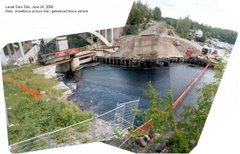
22nd Annual Kipaw Rally has modest turnout. - 23rd does better
The Ashlu river: it could happen to you

Whitewater Ontario

Working Hard to Protect Canada's Paddling Resources
Kipawa, Tabaret, and Opemican
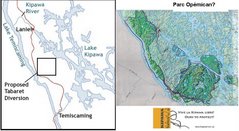
If Hydro Quebec is not actively pursuing Tabaret what is that bite out of Opemican for?
Kipawa Dam: After

Laniel Dam at 2006 Rally
Where is the Kipawa
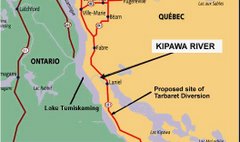
Kipawa flows into lake Temiskamingue, running from Kipawa Lake, under hwy 101 in Quebec
Kipawa Dam

laniel dam at 2004 River Rally
Minden Ontario
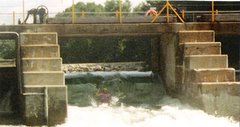
Gull River Water control at Horseshoe lake
T-Shirts Area: These are available now!

Send $25 and a stamped self addressed envelop for the Tshirt, and for the bumper sticker, a stamped and self addressed envelope with $5.00 for the bumper sticker to Les Amis de la rivière Kipawa, 80 Ontario St., Ottawa, Ontario, K1K 1K9 or click the link To purchase a Les Amis "T" contact Doug with the following information: Number of shirts:Sizes: Ship to Address: Method of Payment: cash, cheque and paypal, Shipto address:
Bumper Stickers Now Available

Get your bumper sticker and show your support for the Kipawa Legal Fund ! - send $5.00 in a Stamped, self addressed envelope to: Peter Karwacki Box 39111, Ottawa, Ontario, Canada, K1H 7X0