
Mooncakes ( from Max Keiser)
Widely presented as gifts than actually consumed during the traditional Mid-Autumn Festival each year and manufacturers have found a way to make extra profits without needing to go to the trouble of making any cakes.
A baker can print a coupon for its mooncakes with a face value of 100 yuan (US$16.30) and sell it to a retailer for 65 yuan (US$10.60).
The retailer then sells it to customer A for 80 yuan (US$13).
The customer (A) in turn presents it to customer B as a gift.
Customer B then sells the coupon for 40 yuan (US$6.50) to a street peddler.
The street vender then sells it back to the manufacturer for 50 yuan (US$8.65).
The manufacturer thus makes 15 yuan (US$2.45) on the coupon and all parties are happy, having either made a small sum or given face without any actual product changing hands at any point.
Read more at http://www.maxkeiser.com/#H0yDpjTFXscF69Ig.99
Tuesday, October 1, 2013


Monday, September 30, 2013
Solar Printer:
Markus is an "artist". His purpose was to demonstrate the technology and inspire industry to use the methodology.
Useful Links on this topic
http://www.demagazine.co.uk/video/in-conversation-with-markus-keyser
Tuesday, September 24, 2013
Andrew MacGuire, PM Price Fixing by the Federal Reserve - the Greatest Hedge Fund in History
What if you could swap fiat currency for real money (Precious Metals) at a real discount. You can, if you buy and hold real metal instead of fiat currency. The US Federal Reserve is buying United States debt with money it makes "out of thin air". The money is used to buy physical gold and equity stakes in America's greatest companies on the S&P index of companies.
Asian interests who are holding US debt and excess US Fiat dollars seize the Precious metals at the spot price which has been artifically held low by the sale of "short contracts" on the spot market.
The above, in my opinion, is the essence of the argument made in this fascinating interview between Max Kaiser and Andrew MacGuire.
Meanwhile, your savings, if you have any, your retirement funds, are being inflated away with fiat currency devaluation, or "debt monetization", a concept most schleps don't understand. Bullshit has indeed baffled brains.
Asian interests who are holding US debt and excess US Fiat dollars seize the Precious metals at the spot price which has been artifically held low by the sale of "short contracts" on the spot market.
The above, in my opinion, is the essence of the argument made in this fascinating interview between Max Kaiser and Andrew MacGuire.
Meanwhile, your savings, if you have any, your retirement funds, are being inflated away with fiat currency devaluation, or "debt monetization", a concept most schleps don't understand. Bullshit has indeed baffled brains.
Monday, September 23, 2013
Fukushima News

Fukushima is around 200 km north of Tokyo on east coast of Japan. It is the site of the world's worst ever nuclear failure and is still out of control. TEPCO is dumping huge quantities of radiation into the Pacific ocean where currents carry it to North America and around the globe.
Just 25 km north of Fukushima Daiichi nuclear plant, just five km outside the current 20 km exclusion zone area where cumulative dose levels might reach 20 millisieverts per year, residents have discovered average radiation from approximately 3 to 1.5 microsieverts per hour (13 - 26 millisieverts per year ( mSv/yr)).
20 millisieverts per year is considered to be the yearly limit for radiation workers. – the limit recommended by the International Commission on Radiological Protection is 1 mSv/yr.
Information on Cherynobyl
Thirty minute film from 2012 inside Chernobyl.
http://www.youtube.com/watch?v=YfulqRdDbsg
Additional links on Fukushima
1) http://www.projectcensored.org/3-fukushima-nuclear-disaster-worse-than-anticipated/
2) http://www.washingtonsblog.com/2013/09/the-real-fukushima-danger.html
3) http://www.zerohedge.com/news/2013-09-13/tepco-official-admits-fukushima-out-control
Dr Tatsujiro Suzuki, vice chairman of the Japan Atomic Energy Commission,http://www.bbc.co.uk/news/world-asia-23940214
Sept. 20, 2013 – The following is from
Angela Bischoff - OCAA (angela@cleanairalliance.org)
“If things go south in a hurry, where do our people go? We do not have the luxury of picking up and leaving.” Chief Randall Kahgee of the Saugeen Ojibway Nations speaking of OPG's proposal to bury nuclear waste under Lake HuronPremier Kathleen Wynne : Close the Pickering Nuclear Station Please sign the petition. Also watch Chex TV Channel 12 Durham news’ story on the issue.
The World
☢ Blow to Abenomics as Japan shuts last nuclear reactor Mr Abe had planned to restart reactors in western Japan where earthquake risks are lower, once each has been cleared by the new regulator, but the Fukushima saga has become a national scandal, with polls showing 84 percent of Japanese voters now want to phase out nuclear power or halt it entirely. The government has been forced to intervene since it became clear that Tokyo Electric Power (TEPCO) had no coherent plan to cope with toxic waste. A company official admitted over the weekend that the crisis is “not under control”.
☢ Japan's Nuclear Migraine: A Never-Ending Disaster at Fukushima Japan is stumbling helplessly from one crisis to the next as it battles the ongoing disaster at the Fukushima nuclear power plant. US nuclear inspector Dale Klein is demanding the intervention of foreign experts, but a quick solution is unlikely.
☢ Typhoon hits Japan as Fukushima operator releases water into sea It was unknown how much water was released to sea under the "emergency measure," Koshimizu said.
☢ Endless Fukushima catastrophe: Many generations’ health at stake by Dr. Helen Caldicott
☢ Discussing the ongoing Fukushima Daiichi nuclear disaster 1 hour audio interview with Arnie Gundersen who has 40-years of nuclear power engineering experience.
World Heath Organisation's report on seafood safety:
http://iaea.org/newscenter/focus/fukushima/seafoodsafety0511.pdf
Authoritative Source (published in English)
Tepco website,
NRA website (Japan's nuclear regulatory body) Nuclear Regulation Authority
www.nsr.go.jp/english/
World Nuclear Association website
abc.net.au/news/2013-09-13/us-nuclear-expert-27not-concerned27-by-fukushima-site/4957752
Friday, September 20, 2013
David Schindler tells it like it is in the TO Star: Government is Muzzling Scientific Thought/speech
The following smacks of fascist and totalitarianism. No problem, just
watch hockey and have a Timmy's.
 image from National Geographic Documentaryhttp://www.dailymotion.com/video/xybxxr_national-geographic-inside-undercover-in-north-korea_news

http://www.thestar.com/opinion/commentary/2013/09/20/remove_the_muzzle_from_government_scientists.html

Remove the muzzle from government scientists
Politicians are twisting and hiding science that reveals flaws in their
policies.

By: David Schindler Published on Fri Sep 20 2013

Sean Kilpatrick / THE CANADIAN PRESS
Demonstrators on Parliament Hill protest research cuts and the
government's muzzling of Canadian scientists. (Sept. 16, 2013)

Most scientists are by nature introverts, happiest in the field or the
laboratory, willing to talk about their work if asked but not inclined
to be self-promoters. But on Monday, they demonstrated in public in
several Canadian cities to protest the muzzling of government scientists
and the de-emphasis of government environmental science.

That scientists would take the time and effort to demonstrate publicly
should be deeply disturbing to Canadians. It indicates some dramatic and
important changes in the purpose of government science departments.

In the 1960s and 1970s, government scientists were encouraged to speak
publicly about their work. The resulting science-based policies were the
envy of scientists and policy-makers around the world. Canada was the
first country to regulate phosphorus in sewage and detergents, leading
to the recovery of many lakes from algal blooms. Much of the science
behind that decision was done by government scientists. It was welcomed
by policy-makers eager to anchor their policies in solid science. Canada
also led global efforts to decrease emissions of ozone-depleting
chemicals, resulting in the Montreal Protocol.

A decade later, the transparency in government science began showing the
first signs of weakening. Scientists were no longer encouraged to speak
publicly on their work, but they were not prevented from doing so. They
were warned to avoid directly criticizing government policies, even
environmentally harmful ones. Rebukes were mild for a scientist who
challenged his political masters. At worst, a scolding letter was “put
on your file.”

Such tightening of public communication was one reason I left government
science for academia. In ensuing years, control over science and
scientists has been slowly tightened by politicians and bureaucrats
under both Conservative and Liberal governments, who feared that science
would challenge their ideology and their policies.

Even so, there were successes, such as policies to control acid rain,
based largely on science from government departments. But there were
also failures, as bureaucrats and politicians ignored science and
silenced government scientists to make weak policies that collapsed the
cod fishery and compromised the salmon runs of the Nechako River.
Despite repeated budget cuts, government science staggered on, doing
sometimes remarkable work, using clever liaisons with scientists in
universities and other countries to make important work publicly known.
During this period, I gave many lectures warning that government science
was on a dangerous path. No one seemed to notice.

It remained for the Harper Government to deliver the coup de grâce to
government science. Shortly after it took office, scientists were told
they must have permission from bureaucrats to speak publicly.
Bureaucrats and communications officers issued “speaking lines” that
must be used to avoid criticism of policies. The permitted lines were
often so inane that most scientists chose to remain silent rather be
embarrassed by using them.

Often, obtaining permission took so long that the opportunity to speak
had passed. On issues of particular international sensitivity such as
greenhouse gases, scientists were accompanied to public meetings by
communications “handlers” to ensure that they did not utter any words
that would embarrass policy-makers. Scientists were advised to avoid the
media if possible, using tactics copied from training in bear avoidance
“walk slowly away, maintaining eye contact.” Similar tactics were used
by the Soviet Union to suppress scientific communication during the Cold
War, when KGB agents shadowed scientists participating in international
meetings.

Other actions were taken to ensure there would be less pesky science
done by government departments to challenge the Conservatives’
pro-development agenda. The government divested itself of the
Experimental Lakes Project, government contaminants programs, climate
projects and the Arctic PEARL project. The Fisheries Act and the
Navigable Waters Act were changed to provide less protection, while
expediting large industrial developments.

The Canadian public is beginning to see the problem, as scientifically
misleading and downright fallacious statements are made by ministers on
issues from greenhouse gas emissions to oilsands and protection of
fisheries. Most people are aware that a functioning democracy depends on
an informed electorate. Most also know that we, the taxpayers, pay the
bills for government science and endure the consequences of the
environmental policies, whether they are grounded in good science or
not. We deserve to know what we are paying for.

We must take government science back from politicians who would twist or
hide science that reveals flaws in their policies. We deserve to know
the truth about the impacts of proposed developments on our environment,
in order to avoid mistakes that will be costly to future generations.

Government science once provided this information, and it must be
changed to do so again. The health of not only our environment, but of
Canadian democracy, depends on it.


David Schindler is Killam Memorial Professor of Ecology emeritus at the
University of Alberta. His 50-year scientific career has included 22
years as a federal government scientist.
http://www.thestar.com/opinion/commentary/2013/09/20/remove_the_muzzle_from_government_scientists.html

Remove the muzzle from government scientists
Politicians are twisting and hiding science that reveals flaws in their
policies.

By: David Schindler Published on Fri Sep 20 2013

Sean Kilpatrick / THE CANADIAN PRESS
Demonstrators on Parliament Hill protest research cuts and the
government's muzzling of Canadian scientists. (Sept. 16, 2013)

Most scientists are by nature introverts, happiest in the field or the
laboratory, willing to talk about their work if asked but not inclined
to be self-promoters. But on Monday, they demonstrated in public in
several Canadian cities to protest the muzzling of government scientists
and the de-emphasis of government environmental science.

That scientists would take the time and effort to demonstrate publicly
should be deeply disturbing to Canadians. It indicates some dramatic and
important changes in the purpose of government science departments.

In the 1960s and 1970s, government scientists were encouraged to speak
publicly about their work. The resulting science-based policies were the
envy of scientists and policy-makers around the world. Canada was the
first country to regulate phosphorus in sewage and detergents, leading
to the recovery of many lakes from algal blooms. Much of the science
behind that decision was done by government scientists. It was welcomed
by policy-makers eager to anchor their policies in solid science. Canada
also led global efforts to decrease emissions of ozone-depleting
chemicals, resulting in the Montreal Protocol.

A decade later, the transparency in government science began showing the
first signs of weakening. Scientists were no longer encouraged to speak
publicly on their work, but they were not prevented from doing so. They
were warned to avoid directly criticizing government policies, even
environmentally harmful ones. Rebukes were mild for a scientist who
challenged his political masters. At worst, a scolding letter was “put
on your file.”

Such tightening of public communication was one reason I left government
science for academia. In ensuing years, control over science and
scientists has been slowly tightened by politicians and bureaucrats
under both Conservative and Liberal governments, who feared that science
would challenge their ideology and their policies.

Even so, there were successes, such as policies to control acid rain,
based largely on science from government departments. But there were
also failures, as bureaucrats and politicians ignored science and
silenced government scientists to make weak policies that collapsed the
cod fishery and compromised the salmon runs of the Nechako River.
Despite repeated budget cuts, government science staggered on, doing
sometimes remarkable work, using clever liaisons with scientists in
universities and other countries to make important work publicly known.
During this period, I gave many lectures warning that government science
was on a dangerous path. No one seemed to notice.

It remained for the Harper Government to deliver the coup de grâce to
government science. Shortly after it took office, scientists were told
they must have permission from bureaucrats to speak publicly.
Bureaucrats and communications officers issued “speaking lines” that
must be used to avoid criticism of policies. The permitted lines were
often so inane that most scientists chose to remain silent rather be
embarrassed by using them.

Often, obtaining permission took so long that the opportunity to speak
had passed. On issues of particular international sensitivity such as
greenhouse gases, scientists were accompanied to public meetings by
communications “handlers” to ensure that they did not utter any words
that would embarrass policy-makers. Scientists were advised to avoid the
media if possible, using tactics copied from training in bear avoidance
“walk slowly away, maintaining eye contact.” Similar tactics were used
by the Soviet Union to suppress scientific communication during the Cold
War, when KGB agents shadowed scientists participating in international
meetings.

Other actions were taken to ensure there would be less pesky science
done by government departments to challenge the Conservatives’
pro-development agenda. The government divested itself of the
Experimental Lakes Project, government contaminants programs, climate
projects and the Arctic PEARL project. The Fisheries Act and the
Navigable Waters Act were changed to provide less protection, while
expediting large industrial developments.

The Canadian public is beginning to see the problem, as scientifically
misleading and downright fallacious statements are made by ministers on
issues from greenhouse gas emissions to oilsands and protection of
fisheries. Most people are aware that a functioning democracy depends on
an informed electorate. Most also know that we, the taxpayers, pay the
bills for government science and endure the consequences of the
environmental policies, whether they are grounded in good science or
not. We deserve to know what we are paying for.

We must take government science back from politicians who would twist or
hide science that reveals flaws in their policies. We deserve to know
the truth about the impacts of proposed developments on our environment,
in order to avoid mistakes that will be costly to future generations.

Government science once provided this information, and it must be
changed to do so again. The health of not only our environment, but of
Canadian democracy, depends on it.


David Schindler is Killam Memorial Professor of Ecology emeritus at the
University of Alberta. His 50-year scientific career has included 22
years as a federal government scientist.
Tuesday, September 17, 2013
Costa Concordia continues its metaphoric rise
The Italians have pulled the wrecked ship off the reefs of Gulio, in a classic metaphor for the world's economy. The ship has been recovered, like our economy has be recovered. Unfortunately, they are both in similar condition.

And soon, both will be off to the salvage yards.
And soon, both will be off to the salvage yards.
Subscribe to:
Posts (Atom)
Canadian Rivers

I speak for river users too!
The Queen is not amused!

http://www.ispeakforcanadianrivers.ca/
The Damned Dam - 2005 -
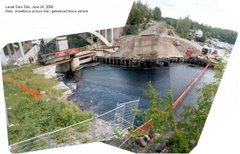
22nd Annual Kipaw Rally has modest turnout. - 23rd does better
The Ashlu river: it could happen to you

Whitewater Ontario

Working Hard to Protect Canada's Paddling Resources
Kipawa, Tabaret, and Opemican
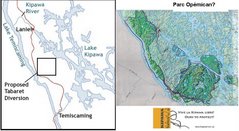
If Hydro Quebec is not actively pursuing Tabaret what is that bite out of Opemican for?
Kipawa Dam: After

Laniel Dam at 2006 Rally
Where is the Kipawa
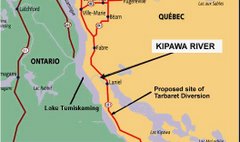
Kipawa flows into lake Temiskamingue, running from Kipawa Lake, under hwy 101 in Quebec
Kipawa Dam

laniel dam at 2004 River Rally
Minden Ontario
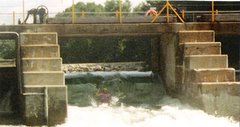
Gull River Water control at Horseshoe lake
T-Shirts Area: These are available now!

Send $25 and a stamped self addressed envelop for the Tshirt, and for the bumper sticker, a stamped and self addressed envelope with $5.00 for the bumper sticker to Les Amis de la rivière Kipawa, 80 Ontario St., Ottawa, Ontario, K1K 1K9 or click the link To purchase a Les Amis "T" contact Doug with the following information: Number of shirts:Sizes: Ship to Address: Method of Payment: cash, cheque and paypal, Shipto address:
Bumper Stickers Now Available

Get your bumper sticker and show your support for the Kipawa Legal Fund ! - send $5.00 in a Stamped, self addressed envelope to: Peter Karwacki Box 39111, Ottawa, Ontario, Canada, K1H 7X0